
How to Find Low-Competition Keywords With High Traffic Potential

On this page
Skip the reading — get a live diagnosis.
Book a callYou don’t necessarily need a high DA score to rank for your niche terms. Especially if you’re targeting low-competition keywords.
And that’s what most brands fail to understand. They chase high-volume search terms and wonder why they never rank. That’s because the real opportunity lies in the overlooked middle ground: keywords that enough people are searching for, but few websites are fighting over.
In this guide, we will show you how to find these keywords and make the best of them.
What Are Low-Competition Keywords?
Low-competition keywords are search terms that fewer websites are actively trying to rank for in search results.
For low-competition keywords, you don’t necessarily need to invest in paid ads or tons of backlinks because they’re inherently easier to compete for. Plus, the top-ranked websites for these terms have weaker backlink profiles, low authority, and possibly mediocre content, giving you plenty of opportunities to address gaps and secure top positions.
One way to look at it is that low-difficulty keywords have a low keyword difficulty score on tools like Semrush and Ahrefs. Most tools measure it on a scale of 1-100, with 1 being the easiest and 100 being the hardest to compete for. This score is estimated using several factors like authority score, number of backlinks, referring domains’ strength, SERP competition, and ranking potential of top results. These scores are estimates and vary between tools.
One of the characteristics of low-difficulty keywords is that they are typically long-tail. According to a Backlinko analysis, 91.8% of search terms are long-tail phrases, offering you plenty of chances to compete for low-difficulty, high-intent keywords.
However, short-tail keywords can also have lower competition, particularly when they’re related to an emerging trend or an untouched niche topic.
The 3 Signals That Actually Determine Keyword Difficulty
- The number of backlinks that appear in the top ten results on the SERPs.
- The strength of referring domains on those top ten pages, as indicated by their domain authority and backlink profile.
- Content depth and freshness of existing top results. Thin or outdated content may lead to missed opportunities.
Why Are They Important In SEO?
High-search-volume, low-competition keywords are some of the most valuable because they’re easier to rank for. But the sweet spot (high volume + low competition) is relatively rare.
They mark the gaps where your content can gain visibility fast and pull in real traffic without going up against established sites for every ranking.
These opportunities show up in nearly every industry, usually when search behavior shifts or a specific trend emerges that larger websites haven’t gotten around to addressing yet. However, identifying them early is key.
A well-built, genuinely useful page targeting one of these keywords has a real shot at outranking whatever’s currently on page one.
A Step-by-Step Process for Targeting Low-Competition Keywords
Identifying low-competition keywords is only the first step in a successful SEO strategy. To turn these opportunities into rankings, you need a structured approach involving keyword research, topic clustering, and competitor analysis.
The following steps will help you understand how valuable low-difficulty keywords can be and how to use them efficiently to increase your chances of ranking in the top search results.
Identify the Industry’s Popular Topics
These could be any broad topics that belong to the industry you’re targeting. For example, for a fitness equipment supply business, the broad topics could be.
- Home gym equipment
- Treadmills
- Dumbbells
- Resistance bands
- Exercise bikes
- Recovery tools
List all the seed terms you brainstorm in a separate document. These broad keywords serve as the foundation for your research, helping you uncover more specific keyword variations with a low KD score and higher traffic potential.
Research Your Broad Terms
For this, you’ll need a keyword research tool. Semrush and Ahrefs are ideal platforms to start, as they have extensive databases and the option to apply filters.
Follow these steps:
- Search your broad terms in the keyword planning tool.
- Filter out search terms for low keyword difficulty (KD) scores and high volume (more on this below).
- Download the filtered list as a CSV to facilitate your future planning campaigns.
Cluster Topics to Create Content
Every low-difficulty keyword in your list doesn’t qualify for a dedicated article. Which is why creating topic clusters is an important step in targeting low-competition keywords.
For example, “best adjustable dumbbells for home gym,” “space-saving adjustable dumbbells,” and “adjustable dumbbells for beginners” all share the same search intent and can be covered in one comprehensive article focused around one primary keyword, like “adjustable dumbbells.”
That way, you’re competing for numerous low-difficulty search terms with a higher likelihood of driving traffic from more than one ranking position.
Perform a Competitive Analysis
Finding low-competition keywords doesn’t automatically guarantee rankings. Sure, low-hanging fruit seems easy to pick, but even that requires some degree of reaching up to get your hands on it. Similarly, to leverage low-difficulty keywords, a backlink and keyword gap analysis is critical.
That means reviewing the top-ranked keywords for your primary keyword to evaluate factors like the number of backlinks, total referring domains, and traffic driving to that page. Have a look at their content as well to review:
- Form and structure
- Writing tone and style
- Topic depth and internal linking
- Presence of videos and images
Factor all these findings into your strategy when attempting to rank for a specific keyword. With low-competition terms, you’ll likely have less work to do. But remember, the right strategy trumps the right keyword research.
How to Find Low-Competition Keywords Using Ahrefs
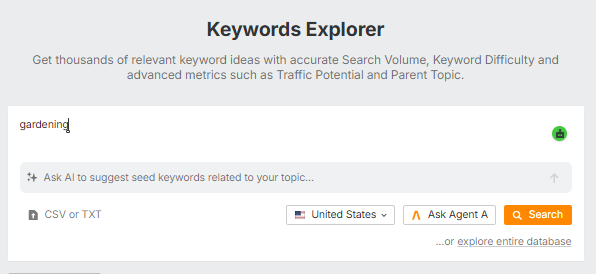
- Navigate to the Keyword Explorer tool on your Ahrefs dashboard.
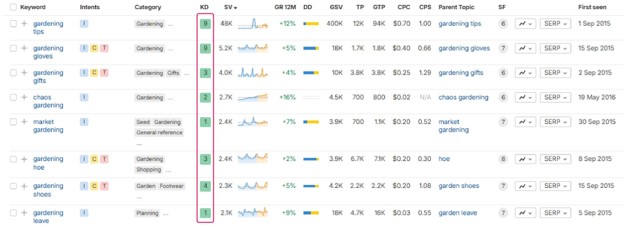
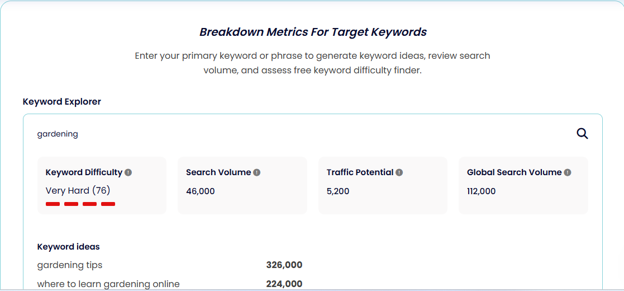
- Insert broad niche terms into the search bar. For example, in the landscaping niche, you can search for a term like “gardening.”

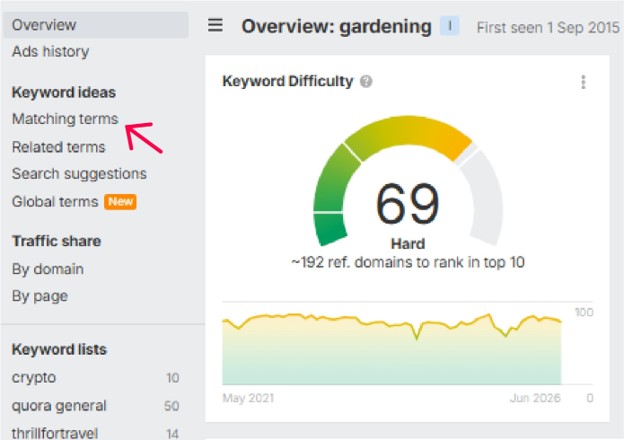
- The result will display the difficulty score and other relevant metrics for your searched term.

- Navigate to Matching terms to come across a list of related niche terms, each with a different difficulty score.

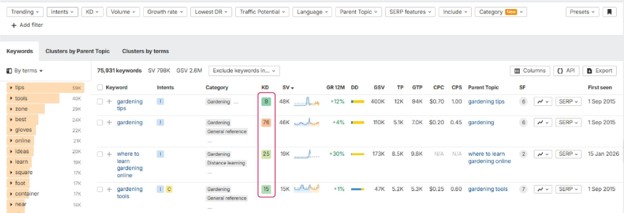
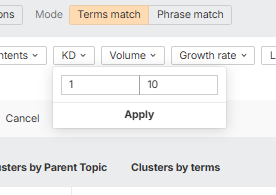
- Since we’re playing by a low-competition, high-volume keyword strategy, apply filters that narrow down the results for the same. In the filters tab, find KD and set the target range from 1-10.

- This will narrow your list to keywords with the lowest difficulty scores, allowing you to handpick the best opportunities to create content and compete in search results.

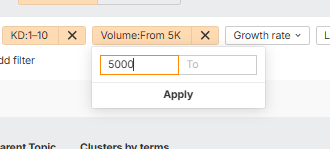
- As an additional step, use the traffic filter to narrow your search to keywords with a search volume above 5,000. This ensures that the results display only keywords with strong traffic potential and a low difficulty level.

How to Find Low-Competition Keywords Using Semrush
Semrush is one of the easiest and best tools to find low-competition keywords. While it may not have as comprehensive a database as Google Keyword Planner or Ahrefs, it’s a good place to start.
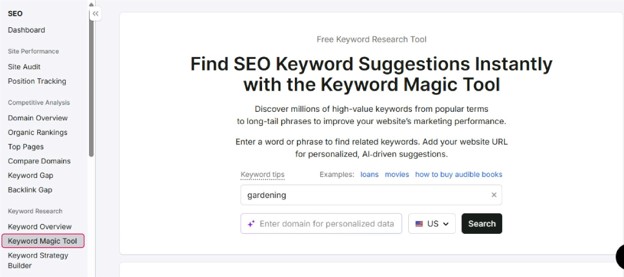
- Go to the Keyword Magic Tool on the Semrush dashboard and insert your target keyword into the search bar. Make sure the region is set to your target location.

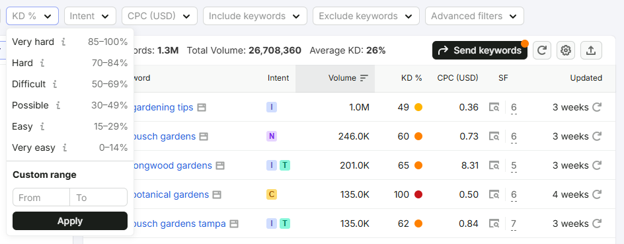
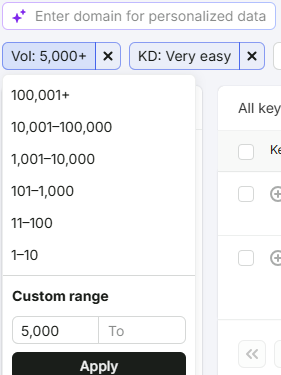
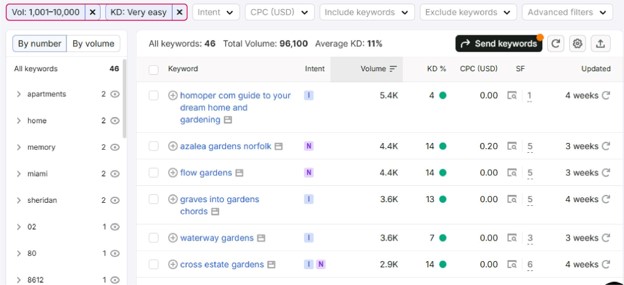
- On the result page, go to filters and filter by KD difficulty. Select the “Very easy” option, or narrow down by a custom range suited to your brand and strategy.

- Using the volume toggle option, filter out keywords with high traffic to make sure the keyword search isn’t just filtered for low competition but high traffic as well.

- Now you have a list of low-difficulty, high-volume keywords to pick from. Organize them in a file (the terms you want to target), evaluate each keyword individually to map topic clusters, and begin creating content to compete for them.

How to Find Low-Competition Keywords Using Google Keyword Planner
Google Keyword Planner helps you unlock untapped keyword opportunities for SEO with its vast and reliable database. The results are highly precise, as the data comes directly from Google’s index rather than a third-party source.
Follow these steps to find low-difficulty keywords on the Google Ads tool.
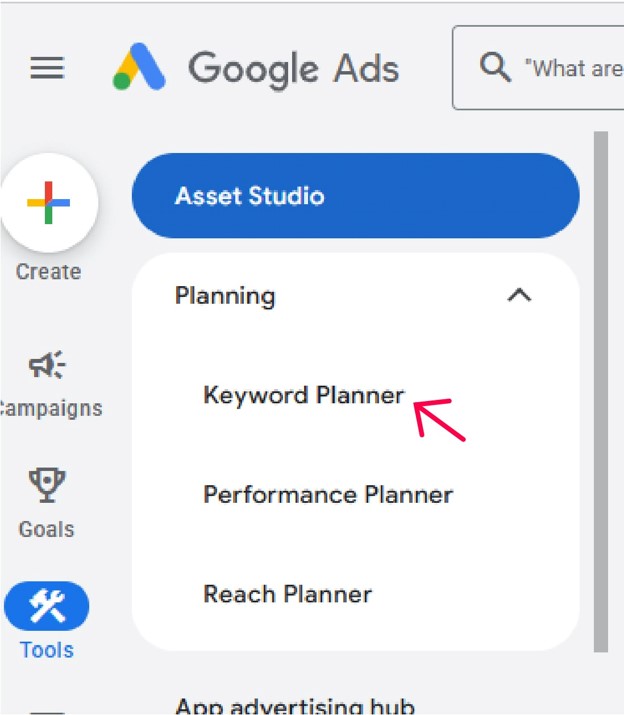
- On the Google Ads dashboard, navigate to Tools > Planning > Keyword Planner.

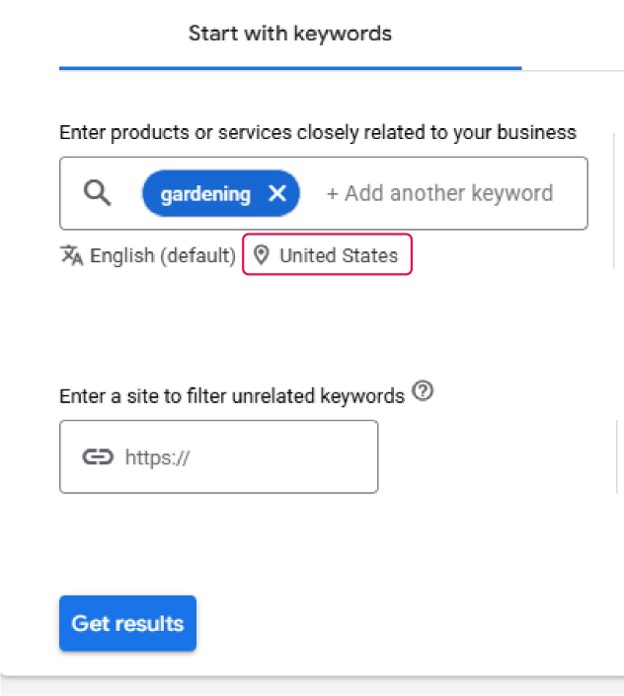
- Next, select “Discover new keywords” to land on the research page. Enter your primary keywords or a broad niche keyword. Make sure the region is also set to your target location to receive volume and keyword data specific to that region only.

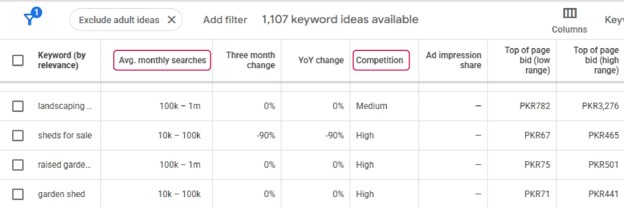
- The results page provides an overview of both the searched keyword and its related terms. Since this dashboard is designed for advertising campaigns, it also includes bid ranges, but those aren’t relevant for our goal. Instead, we’ll concentrate on two key metrics: Avg. monthly searches and Competition.

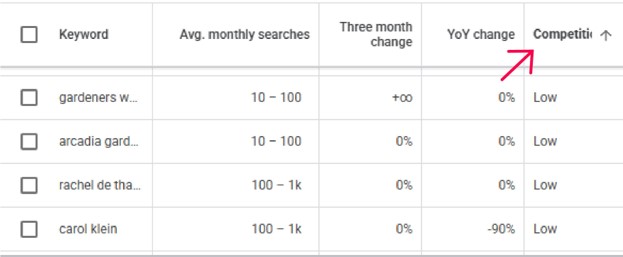
- Hover over the competition column and click it until the list gets reordered for low-to-high competition.

- Locate keywords with a search volume over 1000 to target them for your content, PPC, or link-building campaigns.
Keyword Explorer by Link Building HQ for Keyword Validation
Verify that the keywords you’ve selected are genuinely high-volume, low-competition opportunities using LBHQ’s Keyword Explorer tool. This tool will also give you a list of related terms to build topic clusters around or create keyword lists for blogs.
Making Low-Competition Keywords Work for You: Balance, Timeline, and Risk
Finding low-KD keywords is the easy part; using them well means weighing a few practical realities.
Volume vs. difficulty:
Once you start pulling keyword lists, you’ll run into a natural tension: do you chase the lowest difficulty score, or the highest search volume? In practice, neither extreme wins on its own.
Take two hypothetical keywords:
- Keyword A: 100 monthly searches, KD 5
- Keyword B: 5,000 monthly searches, KD 30
Keyword A will almost certainly rank faster and with less effort. But even a first-place ranking will only send you a trickle of traffic, and that ceiling doesn’t move no matter how well you optimize the page. Keyword B takes more work: better content, a handful of backlinks, and more patience. But the payoff is a page capable of driving meaningfully more traffic once it ranks, and it likely has more long-tail variations orbiting it that you can capture along the way.
Timeline:
Expect roughly 3-6 months to rank for genuinely low-KD terms on a newer site. It can be faster (weeks) for sites with existing authority. Niche matters too, a low-competition term in a hobby space can rank quicker than the same KD score in a crowded industry like finance or SaaS.
Risk of going all-in on low-KD terms:
This strategy can cap your traffic ceiling, as low-difficulty usually comes with low volume. You can also miss high-value, high-intent terms that convert well but happen to be competitive and risk thin, overlapping content that cannibalizes itself. Treat low-competition keywords as a starting point to build authority, then reinvest that momentum into more competitive, higher-volume terms over time.
Key Takeaways
Knowing how to find low-difficulty keywords in 2026 matters more than ever before. Even as the search landscape evolves, traditional rankings haven’t lost their value. If anything, they’ve become a more reliable foundation for visibility in the AI-driven search results.
Rankings don’t just drive traditional traffic, they also contribute to visibility in the AI search features. Studies and claims have found a 54% overlap between AIOs and organic search.
At the same time, targeting low-competition keywords also allows more possible citations for similar search prompts in the AI summaries. The key is to stick to search intent, answer queries directly, and create authoritative content that covers niche topics in depth.
You Know How It Works. Let Us Run It.
Book a call with a strategist or check out our services to find the best fit for you.

Written by LBHQ Editorial Team
Strategists and outreach leads who've shipped 4,000+ links and recovered dozens of penalized domains.