
How to Build Foreign Language Backlinks
On this page
Skip the reading — get a live diagnosis.
Book a callForeign language backlinks and multilingual link building are a core part of a global SEO and link-building strategy. Contrary to popular belief, they matter not only for companies in international markets but also for local and single-market companies looking to gain global visibility and build international search authority.
Non-English SEO can be a strong growth opportunity for brands with international demand and localized content. Data tracking global web demographics shows that only 25.9% of total internet users speak English as their primary language, yet 54% of websites worldwide are in English. That leaves roughly 74.1% to 75%+ of global internet users who are non-native English speakers.
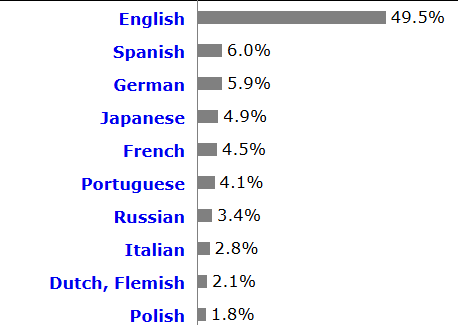
According to W3Techs, English is the content language for roughly 49.6% of websites where the language is known, as of early 2026. That means the other half of the internet is running in Spanish, German, Japanese, French, Portuguese, and dozens of other languages that most link-building teams never touch. That gap is where foreign language backlinks earn their keep.
If your brand already serves, ships to, or plans to enter non-English markets, foreign language backlinks should be part of your international SEO strategy. Let’s explore what foreign language backlinks are, the difference between multilingual and multiregional backlinks and how you can build foreign language backlinks.
What are Foreign Language Backlinks?
Foreign language backlinks are links pointing to your site from web pages written in a language other than your primary content language, typically hosted on domains that serve a specific country or region. A foreign language backlink isn’t just a link from a “.de” or “.fr” domain, either.
Geography and language might overlap, but they are separate signals. For example, a Spanish language backlink an originate from either Spain, Mexico, or a Miami-based publication, and each carries a different weight depending on where you are trying to rank.
In many international campaigns, one relevant link from a respected local or regional source can be more useful than several generic links from sites with little connection to the target market. Search engines increasingly read backlinks as topical and geographic context
How Google Differentiates Between Multilingual and Multi-Regional Link Building
International SEO tends to be used as an umbrella term and that misnomer is exactly what causes foreign-language backlink strategies to misfire. Google’s developer documentation clearly differentiates between two concepts, and that line should guide how you build links, not just how you structure URLs.
According to Google, a multilingual website offers is one that features content in multiple languages, and a multi-regional site is one that explicitly targets users in different countries and how you build links for both of them will differ.
For example, a Canadian business with English and French site versions would need multilingual link building because it serves one country in two languages. And a manufacturer shipping to both Canada and the United States is targeting two countries that mostly share a language. Several sites still do both at once, running separate country versions that are further split by language.
Once you start link building, the difference matters because if your site is multilingual but not multi-regional, language match is the dominant signal to chase.
If your site is multilingual but not country-specific, language relevance becomes a major priority. A French-language backlink can support your French content, but country and local relevance may still matter depending on whether you are targeting France, Belgium, Canada, or another French-speaking market.
But if your site is multi-regional but essentially monolingual, like the Canada and US example, the linking page’s language matters far less than whether the link signals relevance to that specific country.
A generic backlink from a site based in the US may help overall authority, but not very helpful for getter better visibility in Canada itself. Links from Canadian publications, directories, partners, or industry sources that reinforce local relevance would help more.
Teams chasing foreign language backlinks for a site that is actually multi-regional end up collecting non-English backlinks that satisfy a language signal Google was never weighing heavily in the first place. Teams building region-specific links for a genuinely multilingual site miss the language-relevant citations that would have moved rankings across borders. Before you build a single foreign language backlink, work out which problem you are actually solving.
3 Reasons You Should Build Backlinks in Other Languages
Local relevance signals determine whether you rank in non-English markets, not just domain authority alone, which is why it’s important to build backlinks in other languages. Google’s own guidance on international targeting treats hreflang, local hosting, and local link equity as separate ranking inputs, and a site with zero non-English backlinks is telling search engines it has no footprint in that market at all.
- Foreign Backlinks Help You Build Trust in Relevant Markets
If you have an established presence in multiple relevant markets, you have to build trust there. A backlink from Forbes is great, but does it let Google know whether your brand is trusted in Seoul or Warsaw? Local publications, forums, and directories carry that trust instead.
- They Support AI-Search Visibility in Local Markets
AI search engines rely on regional sources to pull citations and build answers. They favor sources written in the query’s language, which means non-English backlinks increasingly influence whether you get cited at all, not just whether you rank.
Recent IPSOS research found that 39% of people in France already use AI engines for search, and generative engines lean heavily on sources written in the query language when they build an answer.
A foreign-language backlink profile shapes whether your brand gets cited in an AI-generated answer at all, and that is a channel you should start building for now, before competitors do as well.
- You Can Close the Competitive Gap
Most competitors never bother building non-English backlinks, so the markets are frequently less saturated than the English-speaking ones you have been fighting over for years.
International SEO growth is always slower initially, because it takes time for local link equity and content authority to build. Once that happens, in approximately twelve to eighteen months, you start to see the results instead of pushing that timeline further out.
If your brand operates in more than one country or language, foreign-language backlinks are an important signal that tells search engines and AI systems you belong in that market.
Building Non-English Backlinks: A Step-by-Step Guide
While the process of building non-English backlinks is more or less similar to how domestic links are made, there’s still a notable difference because prospecting, outreach, and content all need to shift into a new cultural context, not just a new language.
Step 1: Review the Data Before Choosing Your Market
Before you start looking for foreign-language backlinks, you have to determine whether the market is worth the investment. To do that, pull search volume, existing traffic, and competitor visibility for each target language using Search Console. Segment the data by country, then rank markets by realistic opportunity.
Step 2: Audit the Local Link Landscape
You will need to run a competitor backlink audit filtered by country TLD (for example, .uk, .fr, etc.) and content language to see who is already ranking and where because each market has different benchmarks for authority sites.
Step 3: Create Original Content
This is a staple for earning backlinks, irrespective of the language. Good content makes it easier to link to. Good multilingual link-building content is culturally relevant blogs that reflect local publishers’ data and search intent, because you’ll need to grab their attention. Commission local writers or work with native speaking editors to adapt angles, statistics, and examples for the target audience.
Step 4: Tailor Communication For Each Region
Each locality has its own requirements and working style meaning pitch structure, subject lines, and response expectations are going to vary by region. For example. a cold outreach email that performs well somewhere in the US cmight come across as pushy in Japan or extra formal in the Netherlands.
Localize the outreach process itself, not just the content you are pitching. We’ll dive into this in more detail later and why it’s important to have a publisher network in the region so prospecting and outreach are more seamless.
Step 5: Track Language and Country Backlinks Separately
Avoid lumping all your backlinks in one global category that your team has to sift through to find relevant insights. If you want clearer reporting and analysis to evaluate your findings and make adjustments, it’s better to report each language and country segment individually.
How to Do International Backlink Outreach?
International backlink outreach fails most often because teams reuse their English pitch template with a translation plugin and call it done. That approach gets ignored, and sometimes it gets you flagged as spam. Here’s how to approach outreach so it is genuine, and you have a better response rate:
Find Native Speakers to Work With Translated pitches will get ignored, but if you write to a journalist by emulating the communication style that they are most used to, you’re more likely to get a reply. Multilingual outreach that is done by native speakers will get significantly higher response rates than generic, translated pitches because tone, formality, and cultural references matter.
Research Publisher Preferences For Each Market
Know how each market operates because the same tactics that work in one area will not land in another. Some markets favor formal, credential-heavy pitches while others respond better to a casual, relationship-first approach. Spend time researching how publishers in that market already communicate before you write a single email.
Go For Relevance Over Raw Authority
For foreign-language backlinks, a site that genuinely serves your target audience in their own language is more valuable than a giant international outlet with a small readership in that country. Relevance matters more for rankings than reach.
Use Local Data as a Hook to Grab Attention
Publishers respond to original research, and if you can offer market-specific data, a local survey, or a fresh angle backed by numbers, your outreach will appear more valuable to a publisher because it’s genuinely useful to them. Publishers can tell when a pitch is generic. Local data, regional examples, and market-specific research make the pitch more useful and harder to ignore.
7 Common Mistakes to Avoid When Building Backlinks in Other Languages
These are the mistakes that show up most often when auditing backlinks in other languages for clients expanding internationally.
- Treating translation as localization. A machine-translated page reads like a machine-translated page, and publishers notice.
- Forgetting hreflang and technical setup. Foreign-language backlinks pointing to a page with broken or missing hreflang signals create a conflict between topical authority and regional intent.
- Chasing volume over regional fit. Ten irrelevant foreign-language backlinks do less than two from publishers your actual audience reads.
- Skipping local competitor research. Copying your English competitor’s backlink profile into a new market ignores that the competitive landscape is often completely different there.
- Doing outreach with generic or translated templates. These get ignored or flagged, and they train publishers to associate your brand with low-effort spam.
- Ignoring that trust signals vary by country. What counts as a credible source in the US doesn’t always translate to how trust is judged in another market.
- Measuring success with one global backlink count. Without segmenting by language and country, you cannot tell which non-English backlinks are actually driving movement.
How to Measure Foreign Language Backlinks
- links by language
- links by country
- target page
- anchor text
- referring domain quality
- local relevance
- impressions and clicks by country in GSC
- rankings by local SERP
- referral traffic
Conclusion
Foreign-language backlinks don’t mean simply translating your domestic strategy and hoping for the best. If you want to be successful, the best approach is to conduct separate research, outreach, and measurement, and localize it for each market.
International link building is not an extension of your English campaign, and you need to treat it as its own discipline if you want to show up in search results and in AI-generated answers across every market you operate in. If your link building program has stalled outside English-speaking markets, close that gap before a competitor does.
And if you don’t have the bandwidth to do all that, our multilingual link building services offer a tailored and curated native-language link-building strategy for the markets that matter to your growth.
You Know How It Works. Let Us Run It.
Book a call with a strategist or check out our services to find the best fit for you.

Written by LBHQ Editorial Team
Strategists and outreach leads who've shipped 4,000+ links and recovered dozens of penalized domains.