The only constant in SEO is change, and despite updates and rumors to the contrary, backlink acquisition still matters in 2026. Links matter not just in terms of volume or domain rating (DR/DA), but deeper metrics such as relevance, trust signals, and entity associations take precedence. This guide will help identify the highest-value link types, recognize and avoid modern risks, and, most importantly, demonstrate the safe link-building methods required to succeed sustainably.
What is Google’s Current Stance on Link Building?
Google has been cracking down on manipulative link schemes, making it clear that spammy links will result in penalties or algorithmic filtering.
Low-quality, scalable link-building tactics that dominated the 2010s are largely ineffective today. Mass outreach or paid placements are out, and creative ideas and real-world events that garner high-tier editorial coverage are preferred.
The real game-changer for 2026 is AI systems like ChatGPT and Perplexity. Since they are algorithmically weaker than Google at evaluating link quality and co-citations (for now), they just don’t compete when it comes to detecting spammy links. These platforms use RAG (retrieval-augmented generation) to retrieve web content, making it the top priority to get your brand mentioned alongside relevant topics.
The key takeaway for 2026 is to focus on earning authentic editorial mentions and co-citations rather than chasing link metrics. The holistic approach wins: create genuinely newsworthy content that naturally attracts authoritative coverage and positions your brand for visibility in AI search engines, where traditional anti-spam filters are weaker.
What’s Changed in the Last 12–24 Months
Google has been doubling down on black-hat link practices. We’ve seen successive updates to link spam and advanced anti-manipulation systems rolled out. The algorithm now places increased emphasis on both link relevance and deeper entity associations. This means a link from a site covering dog grooming to a site about enterprise cloud software is functionally worthless, no matter the site’s historical authority. Moreover, advances in machine learning have made detecting paid or otherwise unearned links significantly more effective.
The Types of Backlinks You Should Chase in 2026
The search for high-quality backlinks continues, and here are a few types you might need to consider to fulfill Google’s priorities:
1. Editorial Backlinks
Backlink acquisition through naturally earned editorial backlinks is the strategy you need in 2026. These links are earned by publishing content or assets that deliver genuine value and by earning organic mentions from high-quality editors or authors.
The key ingredients are, as always, relevance and contextual fit. The link must make sense in the context of your content to demonstrate that the linking site considers your content a legitimate and helpful resource for its audience.
2. High-Authority Brand Mentions
Instead of relying on domain authority (DA) or domain rating (DR), focus on building topical authority and entity strength. A high-authority brand mention is powerful because it indicates that established entities in your niche endorse you. These mentions boost link equity, especially when the linking brand is recognized as a leader within its specific topic cluster.
3. Multimedia & Rich-Format Links
Links earned through videos, infographics, podcasts, and utility tools/widgets are highly valuable, given the growing role of interactive assets in link building. By creating a unique calculator or data visualization tool, you can encourage broader sharing and linking than static blog posts.
4. Local & Niche Authority Links
If you’re a small-to-medium-sized business owner or offering local business services and niche authority links will boost your SEO health. You want to establish trust within the community. The best strategy is to reach out to local news outlets, community resources.
4 Risks To Consider Before Backlink Acquisition
1. Paid Link Detection Is Getting Smarter
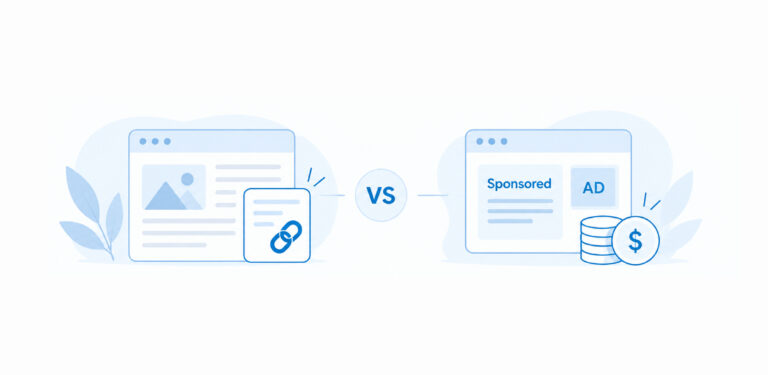
Think twice before purchasing links because Google is getting better at spotting patterns that suggest a link wasn’t earned naturally. Google won’t “punish” you per se, but it will completely ignore your links, which means that’s time and money wasted. Some of the signs they look for include the following:
- Sites that publish lots of sponsored links without proper tags
- Sudden upsurge in links pointing to your site
- Repetitive link placements across unrelated websites
- Pages with unnatural outbound linking behavior
2. Low-Quality Link Networks & AI-Generated Sites
In 2026, there has been a surge in AI-generated websites built solely to sell backlinks. These sites look real at a glance, but they have no genuine audience, no authority, and no editorial standards. Keep an eye out for the following warning signs:
- Same website template used across many domains
- Identical outbound link patterns
- Dozens of topics with no clear niche
- High link volume but little to no real traffic
3. Over-Optimized Anchor Text
Overusing exact-match anchors is one of the biggest red flags in link building. Google sees it as an apparent attempt to manipulate rankings. An alternate, safer anchor strategy for 2026 looks like this:
- Mostly branded anchors
- Naked URLs
- Broad, natural phrases (“learn more,” “this report,” “visit the site”)
- Only occasional partial-match anchors
4. Link Velocity & Footprint Issues
How fast you acquire links matters. A sudden jump from a handful of links to dozens or hundreds can look suspicious, especially if the sources aren’t diverse. Also, keep an eye out for websites that share the same hosting, design, or linking habits. These “footprints” make it easy for Google to connect the dots and flag patterns that don’t feel natural.
How to Assess Link Quality in 2026
Assessing backlink quality in 2026 requires looking beyond DR or DA scores. The real question is this: Is the site you’re trying to get a link from an actual, trustworthy entity with real people reading it?
1. The New Indicators of Real Authority
In 2026, entity strength matters more than DR/DA. These metrics help you assess the website’s quality, but not its legitimacy. Focus on signs of absolute authority, such as:
- Does the site get genuine organic visitors, not bots or inflated numbers?
- Is there any engagement like comments, shares, or community activity?
- Are there actual experts writing the content, with bios you can verify?
2. Engagement Signals Google Cares About
Google now ties link value to how users interact with both the linking site and your content after they click. Links from sites with engaged audiences and strong topical alignment deliver the most value. Some of the key engagement signals include:
- Do people actually click the link to visit your page?
- Once they click, do they stay on the page, visit other pages, or bounce immediately?
- Is the linking site known for covering topics related to your niche?
3. A Practical Checklist for Vetting a Site
Before pursuing a backlink, run the site through this simple checklist:
- Does the site publish topics related to yours?
- Is the site properly indexed, or are there signs of issues?
- Are the external links natural, or primarily to low-quality or commercial sites?
- Is the content well-written and maintained, or does it look rushed or AI-generated?
- Is the traffic consistent, real, and verifiable?
The Best Methods for Backlink Acquisition in 2026
Modern link building relies on creativity, utility, and legitimate outreach. These are the safe link-building methods that are succeeding today.
1. PR & Digital Storytelling
Digital PR backlinks generated through PR and storytelling are highly effective because they deliver high-value, naturally earned editorial links. What works today is content that offers trending angles that journalists genuinely respond to. This process can be streamlined using AI-assisted PR research to identify relevant reporters and publications more efficiently. The goal is to create newsworthy content—studies, commentary, or data—that journalists want to cite.
2. Content Assets Built for Links
The shift toward “answer-first” content is one of the most exciting link-building trends of 2026. These are content assets specifically designed to be referenced and linked to repeatedly. Examples include:
- Data studies and original research.
- Tools and calculators that solve real user problems.
- High-quality infographics that summarize complex data.
3. Guest Posting (Still Works If Done Right)
Guest posting is still effective, but only if executed correctly. It is safe when done for legitimate audience-building and to share expertise on highly relevant, high-quality sites that accept unsolicited submissions based on merit. Google flags websites when guest posts are clearly transactional, involve low-quality sites, or are used purely for mass link acquisition.
4. Partnerships, Collaborations & Co-Marketing
Building joint assets and engaging in collaborations is a fantastic way to acquire natural, relevant links. This can include participating in expert roundups, guesting on or hosting podcasts, and creating shared resources (e.g., co-branded white papers).
5. Local Link Building & Community Authority
Local link building leverages your proximity and involvement within a community to gain links that establish authority. Some strategies you can use include partnerships with non-competing businesses and sponsorships of local events or sports teams (ensure links are properly marked if transactional). You can also earn local editorial wins from the chamber of commerce sites or news blogs.
6 Most Common Backlinking Mistakes to Avoid in 2026
The margin for error in backlink acquisition in 2026 is slim. If you want to ensure your site’s health stays optimal, here are some common pitfalls to avoid:
- Buying cheap links: This is a guaranteed pathway to algorithmic filtering or penalties.
- Over-prioritizing DR: Focusing solely on a high DR score while ignoring relevance or traffic authenticity can be a grave mistake.
- Ignoring relevance: Relevance must be your first filter; a high-authority link that is irrelevant is useless.
- Relying on one acquisition method: A diverse backlink profile automatically appears natural to Google.
- Not diversifying domains: More referring domains indicate a trustworthy website. Too many links from a single domain can look fishy to Google and your users.
- Ignoring link decay and link monitoring: Links break, get lost, or turn toxic over time; continuous monitoring is required.
3 Steps to Building a Sustainable Long-Term Link Strategy
The ultimate goal is to move past reactive link building and develop a strategy for backlink acquisition that creates a genuinely natural link profile.
1. Creating a Natural Link Profile
Google Updates least negatively (and sometimes most positively) impact a natural link profile. Most of your anchors use your brand name or simple, everyday phrases instead of keyword-stuffed text. Your links build up gradually rather than appearing in big, sudden bursts. You publish content people actually want to cite (guides, tools, insights), so you keep earning links naturally without having to force it.
2. Blending Earned, Owned & Acquired Links
To appear natural rather than engineered, your link strategy should balance earned, owned, and acquired links. It should appear as a healthy mix of Dofollows and nofollows; the ratio will depend on your niche. This mix helps dilute the footprint of any acquired links, ensuring your profile looks holistic and organic.
3. Monitoring & Maintaining Link Health
Ongoing maintenance is critical. You must use tools to track both new and lost links. This enables you to detect toxic links early on. While disavowing links is rare, it may still be necessary when you identify links that are actively harming your site (especially after a negative SEO attack or a failed campaign).
Final Thoughts
The rules for acquiring links safely in 2026 are straightforward. Your North Star should be to focus on genuine value, trust, and relevance. The evolution of Google’s algorithms demands smarter, relevance-first link building because this approach always wins in the long run.
If managing these acquisition methods internally becomes difficult, managed link building services can bring outreach, placement, and quality control into one structured campaign.
Your final actionable takeaway is simple: Treat every link as an editorial endorsement, not a transaction. If you build content that demands to be cited, the high-quality editorial backlinks and authority necessary for sustainable growth will follow.
Think of backlink acquisition in 2026 like building a high-end custom home rather than a cheap tract house. The affordable house goes up fast but uses unstable materials, making it prone to collapse (penalties). The custom home requires meticulous planning, high-quality materials per the (relevant authority), and strategic placement, resulting in a durable, valuable asset that withstands every storm.
Good luck building!